Friday, July 1, 2011

Steve Harvey Got Things Confused Pt. 1 (CCL #14)


Personally, I will be the first to admit: Steve Harvey’s first relationship book Act Like a Lady, Think Like a Man is quite entertaining. Through his endearing conversations, personal anecdotes, and understanding of life, Harvey came up with a nice book. He uses common sense to explain certain situations dealing with men. Also, he uses simple moments of logic to drive home certain premises that some already value. With that said, Harvey constructed a book that may be worthy of mass consumption. 


Yet, this does not mean anything.   That book may be considered “general wisdom”. I conclude that the book was quite the contrary. 

There are two main issues that need to be ratified before I even get into the first chocolate covered lie. 

The first issue I have with this book is that it is a tome relegated to the manipulation of the male species. It is one thing to work to empower women to gain the most of their relationships. It is another matter to try to have females come up with clever, skillful, or devious ways to get men to comply with their wishes. Those two things are not one and the same. Relationships are not something that should be based on getting people to do your bidding. In turn, it seems as if this book is somewhere suitable to how-to-train pets rather than relating to men. 


The second issue deals with the fact that the book uses plenty of opinions and no hardcore facts. I am not trying to discount any of Steve Harvey’s experiences whatsoever. Yet, I do find it troubling that NO concrete knowledge being used. Using relatable relationship experiences is fine. But, using those solitary experiences (like the comparison between a “90 Day Rule” and 90 days working before you get benefits. Really, Steve? [1]) are not enough. In the end, Not having worthwhile research will be a continual contrary argument point.

This leads me to the first chocolate covered lie dedicated to a singular manuscript: it is okay for women to relegate their “cookie” as something that is earned


Of all of the ideas within this book, this has to be the worst. Let me break this short sighted malarkey to its very last compound. 

For one, refining and defining oneself as something “that should be earned” only leads to one thing: self-objectification. Imannuel Kant, the German philosopher, characteristically wrote this in his Lectures on Ethics:
 “…sexual love makes of the loved person an Object of appetite; as soon as that appetite has been stilled, the person is cast aside as one casts away a lemon which has been sucked dry. … as soon as a person becomes an Object of appetite for another, all motives of moral relationship cease to function, because as an Object of appetite for another a person becomes a thing and can be treated and used as such by everyone.” [2]

Let me break this down for you: once that man sees you as an object to feed his hunger, to satiate his thirst, then that only makes you no more than a $5 Foot long or a bottle of Gatorade. Sure, you will hit the spot. Yes, you will serve a purpose. However, will this purpose be of “a regal, dedicated woman” or a “piece of ass”? 


            Another issue that I have with this mentality is that it actually mishandles the understanding of male sexuality. Dr. Helen Fisher, the anthropology professor and human behavior researcher at Rutgers University, had this to say:
“Sex is more intimate to men than it is to women. Intimacy to women is talking…men tend to get intimacy from doing things side by side, together. Sex is really a gift that women give to men. Men see it as that and the actual sex act is very intimate for men.” [3]
So, on average, women are the ones that will always want to intimately talk. Meanwhile, your men will be intimate through doing things together (including sex). Consequently, Harvey’s book missed the mark when it came to fully understanding a male’s expression of intimacy. 

            Do not get things mixed up: men do love sex. We feel that it is an important part of a working relationship. Also, we enjoy the release that it gives us and the health benefits that come along with it. Plus, we think sex is GREAT! So, Steve Harvey is right when he notes that “if you mess around and start shelling out the cookie in crumbs, it’s going to be a problem.” [4]



            But, sex is our main goal if we are trying to have sex and have sex only. In relationships, sex is an expression of intimacy.

            Let us have another honest look at things: how can any woman honestly be okay with objectifying themselves in that manner? True, women should want be desired by a man of their choice. Yes, that man should want you. Yet, understand that sex is just the side dish to the meal that is a relationship. Without it, it can be incomplete; having sex with no worthwhile relationship will REALLY leave your man on an empty stomach. 

            In the end, Steve Harvey’s first mistake was built around good intentions. He wants women to understand a male’s sexual desires. Yet, those sexual desires unequivocally leave men being demoted to that of a hormonal, instinctual beast. Sex should NEVER be a goal in a relationship. Sex is a goal of those looking for whores, one-night-stands, and the club-happy undesirables. Relationships are built around expressions of love, trust, and intimacy. Therefore, Steve Harvey missed the mark. 

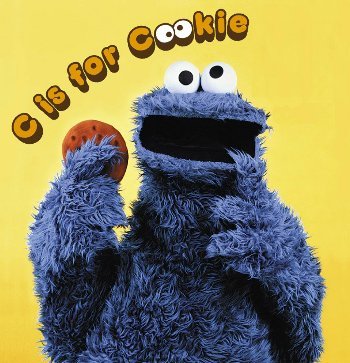
            Oh, and this won’t be the last chocolate covered lie to come from this book. Just you all wait.  Shout out to the Cookie Monster.

            ‘Nuff said and ‘nuff respect!


[1] Harvey, S. (2009). Act Like a Lady, Think Like a Man. HarperCollins, New York, NY.
[4] Harvey, S. (2009). Act Like a Lady, Think Like a Man. HarperCollins, New York, NY.





Thursday, June 23, 2011

The Greenest of Emotions (AKA A Whole Lot of Envy): Chocolate Covered Lies #13


Last time around, we covered the ever elusive emotion of jealousy. Much was covered about the topic, from how it could be considered healthy to how it is actually anti-functional for human relationships. However, it has to be understood that jealousy is an emotion people will still validate. Also, it is an emotion that people will still experience. Experiencing this emotion is one thing. Yet, the validation will still baffle me. With that said, jealousy will still be that unnecessary evil that we could conquer. 

But do we want to conquer it? I doubt it. What will probably happen is that people will shift from being jealous to just showing their envy (if possible).  Which brings about our next chocolate covered lie: envy is a worthwhile emotion

 To make sure we are on the same page, the term envy needs to be explained. Envy can be defined as a feeling of grudging or somewhat admiring discontent aroused by the possessions, achievements or qualities of another [1]. Like jealousy, it harbors ill will and feelings towards someone. However, jealousy usually deals with relationship fidelity (of some sort). With envy, there is the feeling of dislike/disdain of another person over their possessions. In the end, envy exists because one person doesn’t like another having more than them. 


Now, there are times when envy can be helpful. It can be a transient, nonthreatening feeling. More so than anything, it can be an “envy-lite”, which is closer to admiration (“Wow, her body is nice. I should ask her how often she works out.”)[2]. This is a great way of looking at a situation. A person might see someone that has what they desire. What that person could do is channel that into working harder to obtain the object of desire. Or, they could inquire how that person got what they have. Inquiringly, someone can use their slight envy to find their way to higher order achievement.

Yet, when things get heavy is when the foolishness occurs.  

The problems begin to occur when “envy-lite” turns to “heavy duty envy”. It can be what University of Kentucky’s Professor Richard Smith calls envy proper, which involves some form of ill-will (“She’s got a great figure, for her age. Where are the lipo scars? You can tell that she’ll run to fat in a few years.”) [2]. What it becomes is this malicious vehicle towards depleting the achievements of others. It festers within a person’s being to actually disregard the acquisition of betterment for others. Consequently, envy can turn into something much worse than it needs to be.   


What people don’t really understand is that envy can be as stupid, or even more nonsensical, than jealousy could ever be. And yes, this is my opinion. Now watch me manipulate and masturbate these words to make them climax with profound sense and understanding.

Get ready. There is plenty to be enlightened about. 

First of all, both jealousy and envy are forms of schadenfreude. Schadenfreude is the German term that for “finding pleasure in the misfortune of others” [4]. This can say a lot about humans and humanity. For someone to take pleasure in the misfortune of others is quite unfortunate. Outside of issues of confrontation or competition, looking forward someone’s hardship is quite shocking. It is never a good thing for someone’s psyche to take pleasure in anyone’s disaster. With that said, schadenfreude shows the ugly side of humanity that can take the form of envy. 

Another issue with envy is that it causes too many issues. First of all, envy can distort one’s perspective on life. People can become so engrossed in another’s achievements; they will do anything to “level the playing field”. Another problem with envy is that it causes division. People that are so envious of others that they become spiteful are really hard to be around. They will either do things to make themselves feel better or to make others feel worse. In the end, envy can be a relationship cancer that chemotherapy cannot cure.  

In laymen’s terms, envy is an emotion that is relegated to haters. Plain and simple.


If one wants to get biblical with it, Proverbs even notes that “a tranquil heart gives life to the flesh, but envy makes the bones rot” [5]. 

Even still, people have not realized the cause of their envy: their insecurities. There are many different reasons that people are insecure:
·         Feeling of not being "good enough" to meet the challenge of a situation you face in life.
·         Sense of helplessness in the face of problems, conflict or concerns.
·         Belief that one is inadequate or incompetent to handle life's challenges.
·         Fear of being discovered as inadequate, ill-fitted or unsuited to meet responsibilities at home, school or on the job.
·         Sense of not fitting in, being "out of sync" with those in your peer group.
·         Perception that life is unpredictable with most of the expectations you have to meet not clearly understood. [6]
Within all those reasons, there will be ways to become envious of others. A person will dislike others that achieve because they don’t feel good enough. Also, people that don’t fit in or feel inadequate in all of life’s challenges will find ways to downplay others. By finding the problems, issues, and calamities within themselves, they will seek to find the same within others. In truth, envious people find profound ways to break people down because they themselves have already been broken into pieces within their own minds. 


            Connecting all the dots, envy can be considered to be stupid (in my eyes) because it shows WAY too much concern for others. I understand that one can use the success of others as inspiration towards achieving their own. I can also understand having successful people give them advice. However, I cannot condone bringing others down to bring themselves up. Also, I could never understand worrying about the affairs and constructs of other people’s progress when there should be concern of MY OWN affairs. In short, why in Sam Hell am I going to focus on someone else’s house of cards when I shouldn’t have used that pack of Bicycle’s to even construct my own fortress?

            Envy has a very easy solution: focus on one’s own self-improvement. When a person focuses on doing what they need to do, then they will be okay. If a person doesn’t feel good about themselves, then improve what they can. Also, they should never waste time downplaying others. It doesn’t do any good to even pay attention to another person’s accomplishments unless it will be used to help promote/motivate/conceptualize one’s own. Take care of their own and make sure their goals/aspirations/hopes/dreams/whatever are accomplished is much more effective than harboring ill will because others are doing what they haven’t taken the time to do.

‘Nuff said and ‘Nuff respect!
           

[5] (Prov. 14:30, ESV)      
[6] http://www.livestrong.com/article/14655-handling-insecurity/

Sunday, June 5, 2011

The Green Eyed Monster Within Us: CCL #12


“Jealousy is a disease, love is a healthy condition. The immature mind often mistakes one for the other, or assumes that the greater the love, the greater the jealousy -- in fact, they're almost incompatible; one emotion hardly leaves room for the other. Both at once can produce unbearable turmoil.”

Robert Heinlien, American science fiction writer

I have never, during my adult life, understood the purpose of jealousy. Yes, there has been a case in which I was jealous of someone when I was younger. Then again, I was 13, impressionable, and had the styling of Ed Grimley. Growing older, it became more of a crutch. More than anything, I started erasing any reasoning or emotional attachment that leads to becoming jealous. I understand that it happens. However, I grew tired of even trying to make myself care about situations that are out of my control. Thus, jealousy lost its place in my relationships when I mitigated the reasons it exists.

The biggest issue with this is many others disagree with me. There are those that feel jealousy is a form of someone actually caring. For example, a person may feel covertly complimented when their partner is mildly jealous. And catching someone flirting with their beloved can spark the kind of lust and romance that reignites a relationship [1]. With that said, there are moments that jealousy can actually HELP a relationship.


However, this is only a minute situation of jealousy. Full blown jealousy can be much worse. And the worst case scenario(s) is the cause for the next chocolate covered lie: Jealousy is either helpful or a necessity in a relationship.

Let us not get confused here: jealousy is a natural occurrence in some animals. Primatologist Jane Goodall and evolutionary biologist David Barash witnessed this amongst primates and bluebirds respectively [2]. Goodall paid attention to a female chimp “flirting” with a male chimp. When the male ignored her for another female, the female chimp attacked the male. With Barash, he planted a dummy bird where the female perched. When the male saw it, he hovered and pecked at it and pulled a few feathers from its female companion [3]. Thus, it is safe to say that evolution has not affected the possibility of jealousy’s existence.

However, humans have this thing called “free will”. All of our actions are not based on instinct. While it is natural for this emotion to occur, it still does not make it acceptable. Now, let us carry on. 


What makes jealousy so unappealing is the emotion is based on insecurities. These insecurities are involved with the fact that one person is afraid of losing their mate to someone else. They feel that there is some sort of “competition” for their mate’s affections. Eventually, one person becomes mad, thinking that their mate is involved with someone else behind their back. Therefore, a person’s insecurities will manifest into jealousy because they would rather focus on all the fun they think their mate is having with someone else than being focused on relationship growth.

What I hope my good readers out there noticed is that I mentioned “the fun they think” their mate is having. It is jealousy. Meaning: all of the scenarios that you think are taking place are not happening. IF they were happening, it would not be called jealousy. Rather it would be called “disrespect” or “toying with someone’s affection and feelings”. Those are NOT the same thing as jealousy. 


Are we clear on this? Cool. I have to make sure of things sometimes.

Yet, people tend to forget that jealousy can become dangerous. Pathologically jealous people seek to control their partners because they means an individual believes they feel they have exclusive ownership over another and that this ownership is necessary for them to maintain the relationship [4]. You are not only their partner, but you are THEIR PROPERTY that they own. Inclusively, a person that think that they “own” someone will “make claims” of their property, objectifying the person they think they “own”. This can cause many psychological and sexual scars in the female psyche. In addition, this can be troubling for women in particular because statistically the most obscene homicidal and suicidal effects of IPV (intimate partner violence) generally occur from pathologically jealous men against female partners [5]. Thus, extreme bouts of jealousy (the pathological kind) can hurt and kill. 


Still think jealousy is that helpful to a relationship? Now, let us carry on some more.

Even more damaging is the possible harm it can do to the person that is actually being jealous. Steven Most, a cognitive psychologist, and Jean-Philippe Laurenceau, a specialist in social relationships, conducted two experiments involving a total of 52 romantically involved couples on the campus of The University of Delaware [6]. Their work was used to see if any participants experienced “emotionally based blindness”. Their research shows that women who admitted they were jealous when their guy ogled photos of other women (presumably female students at the university who were "accessible") couldn't concentrate on a basic computer task well enough to recognize simple images that flashed quickly across the monitor [7]. Consequently, feelings of jealousy can disrupt a person to the point where they can’t function properly.

Is there some hope for people that have bouts with jealousy? Absolutely. 
 

There are some key steps in helping yourself with jealous feelings:

1.)    Communication, communication, communication: Communicating with one’s partner can help both parties understand what is going on. Also, it can either help confirm one’s suspicions or find relief that it was all in one’s head.

2.)    Self awareness: One should think about what is causing these feelings. Once they know that it all may be fabricated, then they need to see whether or not their partner is trustworthy OR is it that their own insecurities are causing unnecessary issues. Let’s face it: one cannot be mad at their partner when the cause for concern is that one has more issues than Jet magazine.

3.)    Shift the point of view: One should think about the situation from the other person’s perspective. They may learn something about themselves. Or, they could learn more about their partner and how they are. Either way, it is a great learning experience.

4.)    Control of emotions: This part may be the hardest unless 1-3 are done. A person should put themselves in check if they see themselves getting jealous for no good reason. Also, they should make sure that they work to understand the full situation to see if they are being jealous or if something is truly wrong. Being level headed can accomplish more than flying off the handle and letting emotions preside over focused, intellectual thought. If this cannot be achieved, then seek professional help.

Jealousy is that green eyed monster lurking in all of us. However, that does not mean that jealous emotions cannot be controlled. With being human, it is all about being in control of YOU. It is a rare case scenario that a person can control the world around them. BUT, they can control what they do, how they act, and how they react. In the end, that same green eye monster can become the grey area lace of reason.

‘Nuff said and ‘Nuff respect!